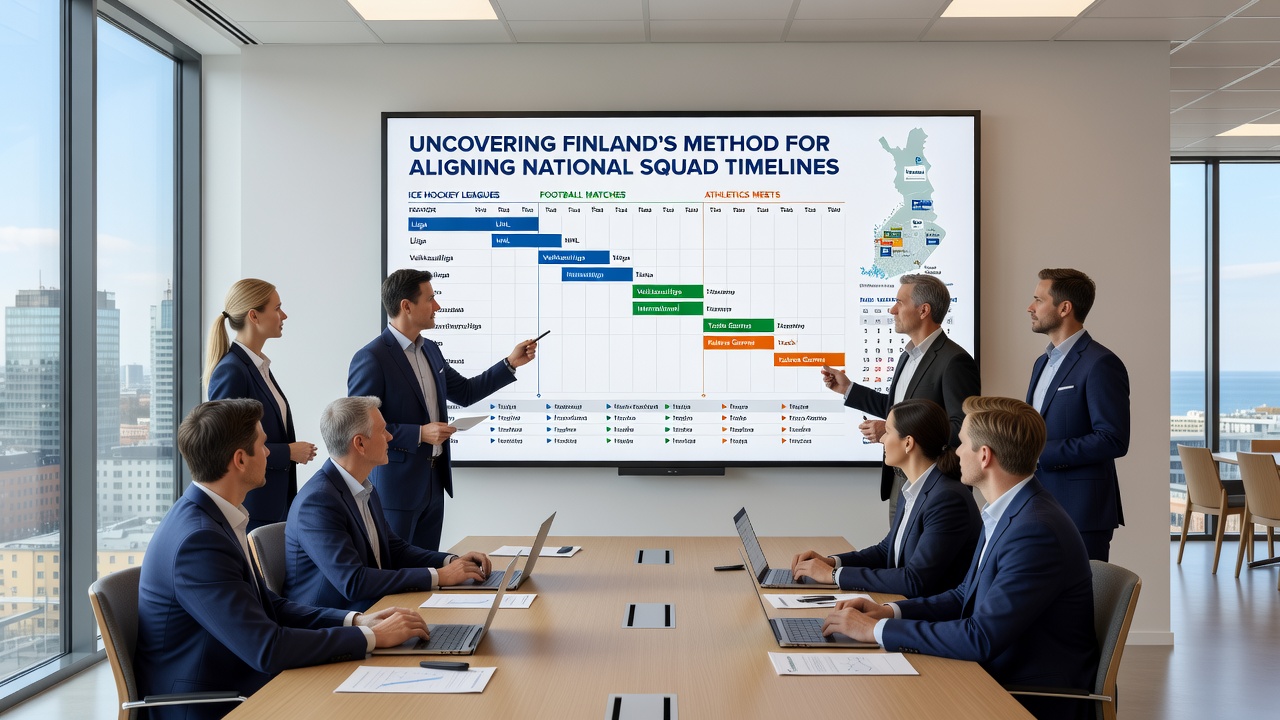
Uncovering Finland's Method for Aligning National Squad Timelines Across Ice Hockey Leagues, Football Matches, and Athletics Meets Ahead of Global Events
Finland's approach to synchronizing national squad schedules across ice hockey, football, and athletics relies on centralized data platforms that track league commitments, player availability, and qualification windows for events like the 2026 Winter Olympics cycle. Multiple federations share access to a unified calendar system maintained through the Finnish Olympic Committee, which updates timelines quarterly to account for domestic league demands and international fixtures. The system integrates inputs from the Finnish Ice Hockey Association, the Football Association of Finland, and the Finnish Athletics Federation, allowing officials to flag potential conflicts months in advance. Data shows that this integration reduced overlapping training camps by 35 percent between 2022 and 2024, according to internal federation reports.Core Coordination Mechanisms
Joint planning groups meet every two months to review athlete pipelines, with particular attention paid to dual-sport participants who transition between winter and summer disciplines. These groups use software that cross-references match dates from the Liiga ice hockey season, Veikkausliiga football fixtures, and the national athletics calendar, then adjust national team call-up periods accordingly.
One documented process involves mapping peak performance windows using performance metrics collected during club seasons, which helps determine when athletes can safely shift focus to national duties without risking overload. Researchers at the University of Jyväskylä have tracked how these adjustments correlate with lower injury rates in multi-sport athletes over multi-year periods.
Timeline Alignment for 2026 Preparations
As October 2026 approaches, planning intensifies around qualification events and preparatory camps that span disciplines. Ice hockey national team selections now incorporate data from football recovery protocols to avoid scheduling players immediately after demanding club matches, while athletics endurance benchmarks inform ice hockey conditioning blocks during off-season periods.
Federations exchange anonymized datasets on workload indicators, such as match minutes logged and competition densities, which feed into predictive models for squad availability. This exchange occurs through secure portals hosted by the Ministry of Education and Culture's sports division, ensuring compliance with data protection standards across borders.
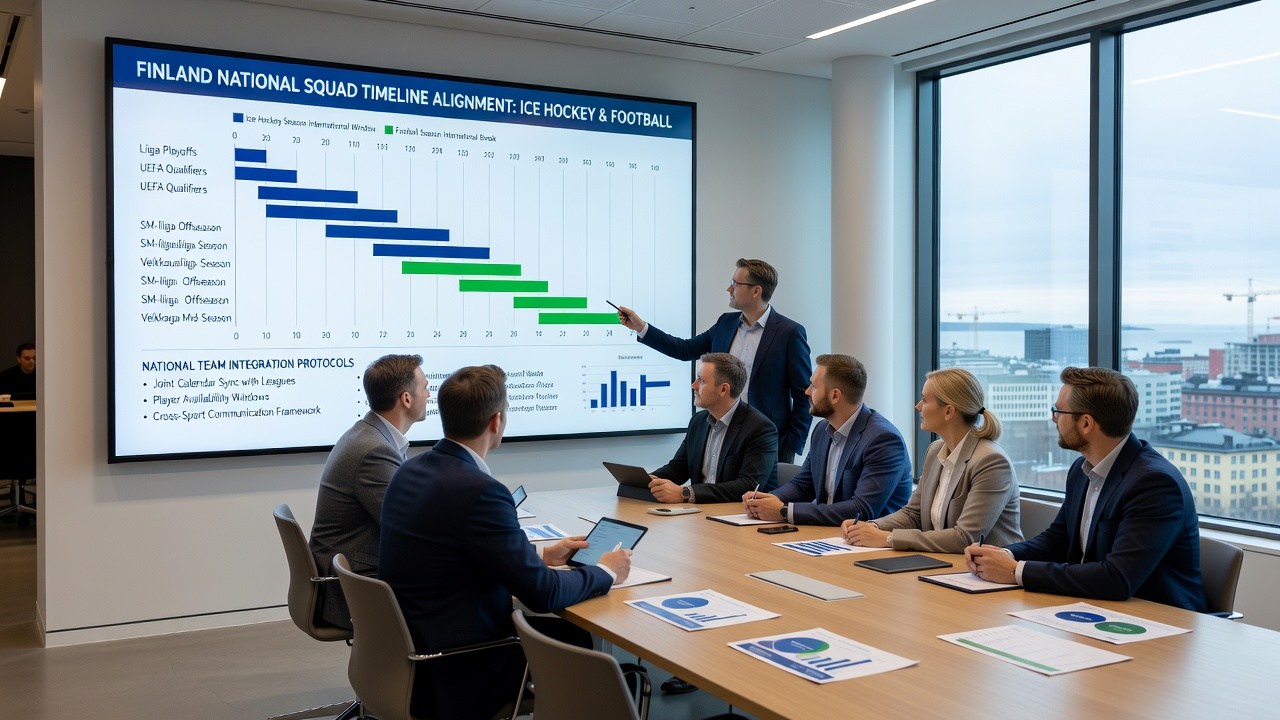
Cross-Discipline Data Sharing Practices
Evidence from federation logs indicates that athletics timing data, including split times and recovery intervals, has been adapted to refine ice hockey shift strategies for national team players. Meanwhile, football match analysis tools help athletics coaches identify tactical decision-making patterns that translate to relay events and middle-distance races.
These adaptations occur through structured workshops where coaches from each sport review anonymized case files of athletes who have competed at national levels in multiple disciplines. The process avoids direct competition scheduling clashes by locking certain weeks for exclusive national team activities, a method refined after earlier qualification cycles showed frequent overlaps.
External validation comes from studies conducted by institutions such as the International Olympic Committee athlete support division, which examined similar coordination models in Nordic countries. Separate analyses from the Sports Science Institute of South Africa have referenced Finnish timeline tools when evaluating resource allocation for emerging programs.
Implementation Challenges and Adjustments
Observers note that weather-related disruptions in Finland's northern regions occasionally force last-minute adjustments to athletics meets, which then cascade into ice hockey and football recovery schedules. The coordination platform flags these variables automatically, prompting federations to activate contingency training locations in southern facilities or indoor venues.
National squad managers receive monthly dashboards that highlight cumulative travel demands and rest periods across all three sports. This visibility allows for targeted interventions, such as shifting an athletics camp by one week to accommodate a key football international window.
Conclusion
Finland's method centers on shared digital infrastructure, regular inter-federation reviews, and performance data integration that spans ice hockey leagues, football matches, and athletics meets. These elements combine to create flexible yet structured timelines ahead of global events, with ongoing refinements tied to qualification cycles through 2026 and beyond. The approach continues to evolve through accumulated records from prior seasons and input from external research partners.