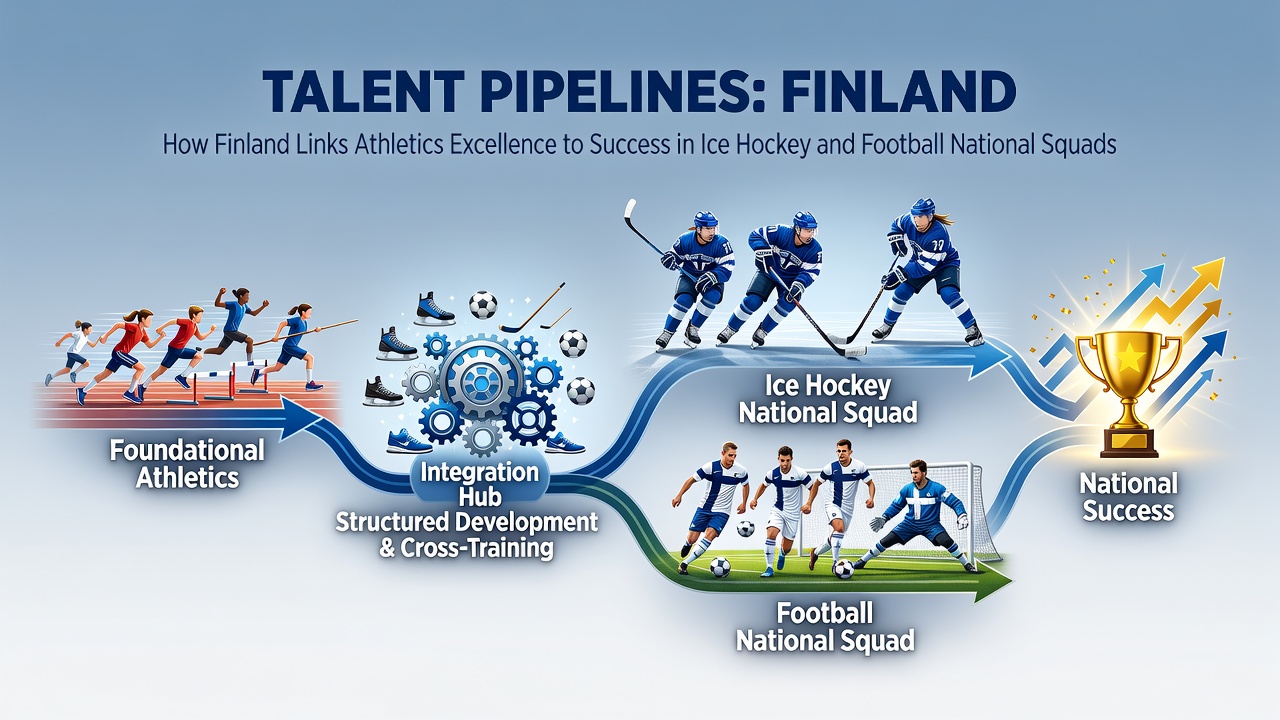
Talent Pipelines: How Finland Links Athletics Excellence to Success in Ice Hockey and Football National Squads
Finland has built structured talent pipelines that connect foundational athletics training with the specific demands of ice hockey and football, and observers note how national squads benefit from this integrated approach. Data from the Finnish Olympic Committee shows that athletes who complete early-stage track and field programs often transition into team sports with measurable advantages in speed, endurance, and injury resilience.
Youth academies across the country incorporate athletics drills into weekly schedules, and this method allows coaches to identify promising individuals early while building physical literacy that transfers directly to the ice or pitch. Researchers at the University of Jyväskylä documented that participants in these combined programs demonstrate higher VO2 max values and improved change-of-direction speed compared with peers who focus on a single sport from the outset.
Early Identification and Cross-Training Structures
Regional sports centers coordinate with schools to screen students for athletic potential through standardized tests that measure sprint times, jumping ability, and aerobic capacity. Those who excel receive invitations to specialized camps where sessions blend running mechanics with puck-handling or ball-control exercises, and this overlap helps reduce the typical drop-off rate when athletes reach their mid-teens.
Coaches emphasize periodization so that peak athletics phases align with off-season periods for hockey and football, which prevents overload while maintaining year-round development. Figures released by the Finnish Ministry of Education and Culture indicate that more than 60 percent of current national team players in both sports participated in at least three years of formal athletics training before specializing.
Pathways Into National Squad Selection
Scouts from the Finnish Ice Hockey Association and the Football Association of Finland routinely attend combined athletics and team-sport events, and they track metrics such as 30-meter sprint times alongside sport-specific statistics. This dual evaluation process feeds into centralized databases that flag athletes for accelerated pathways, and similar systems operate in other Nordic countries where climate and population size create comparable talent constraints.
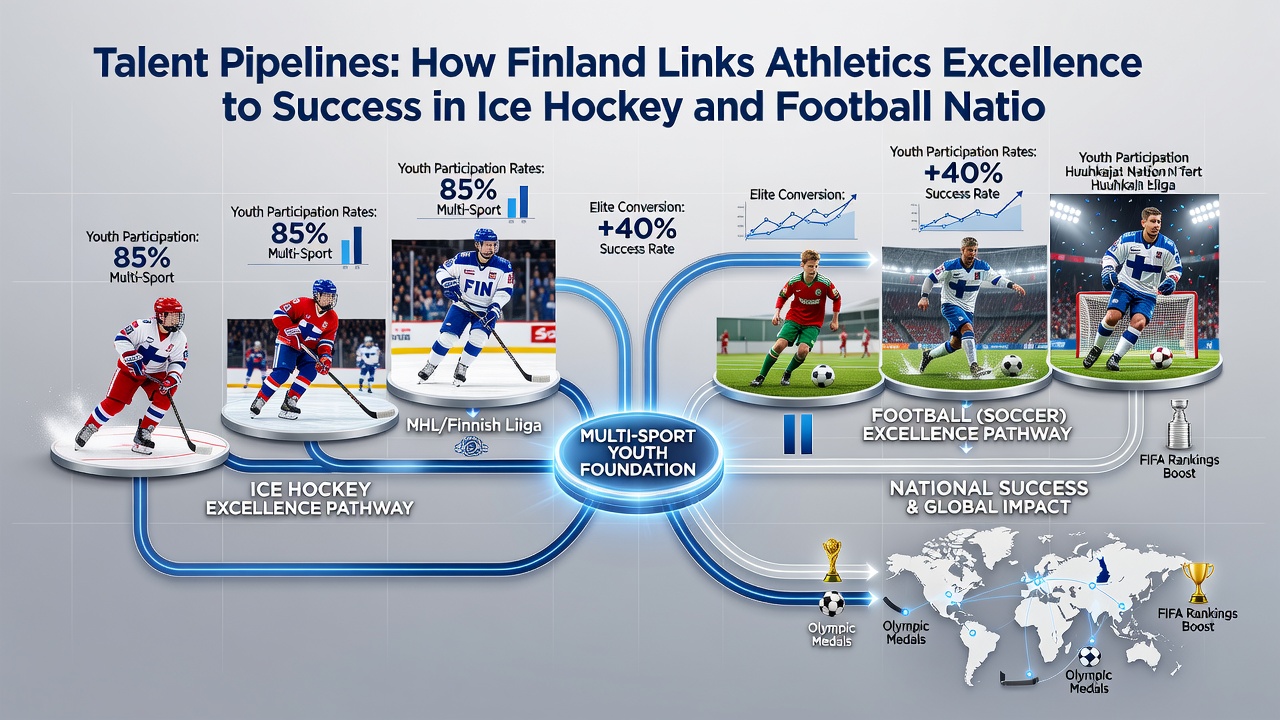
By September 2026, updated selection protocols are scheduled to incorporate wearable technology data from both athletics competitions and team training sessions, which should provide finer-grained insights into workload management across disciplines. National squad coaches report that athletes arriving through these pipelines adapt faster to high-intensity tactical drills because their base conditioning already meets elite thresholds.
Performance Outcomes and Supporting Research
Longitudinal studies conducted by the Research Institute for Olympic Sports in Finland reveal correlations between early multi-event athletics participation and reduced injury rates in professional ice hockey and football careers. Players who logged significant hours in events such as the 60-meter dash or long jump showed lower incidences of hamstring strains and ankle instability once they reached senior levels.
International comparisons drawn from a report by the Canadian Sport Institute Pacific highlight how Finland’s centralized talent tracking gives it an edge over larger nations that often rely on club-level identification alone. Finnish national teams have maintained top-ten FIFA and IIHF rankings in recent cycles, and analysts attribute part of that consistency to the steady supply of athletically prepared athletes entering the squads each season.
Future Developments in Talent Integration
Plans are underway to expand the athletics-to-team-sport model into additional winter and summer disciplines, and pilot programs in 2025 already tested shared coaching resources between athletics federations and the two major team sports. These initiatives aim to preserve the core strengths of Finland’s system while adapting to evolving international competition standards.
Conclusion
Finland’s approach demonstrates how deliberate linkages between athletics excellence and national squad development can create repeatable pathways for ice hockey and football players. Continued data collection and cross-federation collaboration are expected to refine these pipelines further in the years ahead.