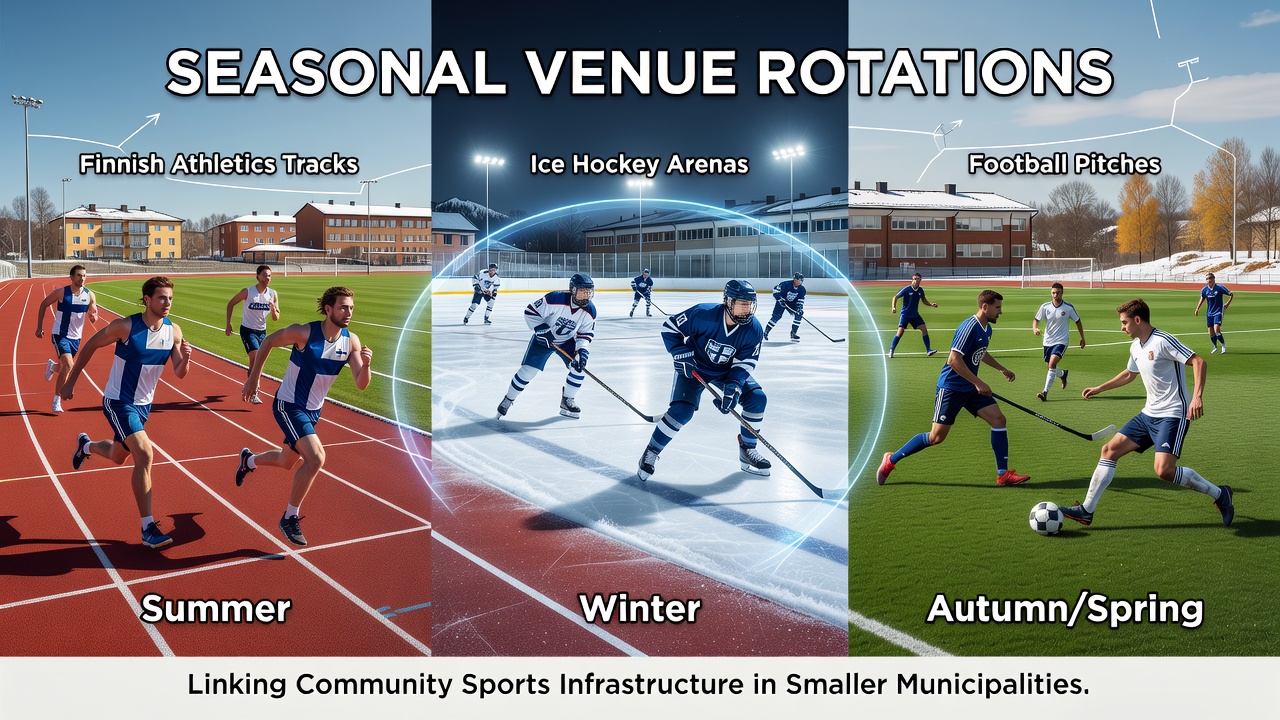
Seasonal Venue Rotations That Link Finnish Athletics Tracks with Ice Hockey Arenas and Football Pitches in Smaller Municipalities
Smaller municipalities across Finland coordinate seasonal venue rotations that convert athletics tracks into ice hockey arenas and football pitches as weather patterns shift throughout the year, and data from the Finnish Institute of Occupational Health shows these shared facilities serve populations under 20,000 residents in regions where separate venues remain economically unfeasible. Local authorities schedule conversions starting in late September so that athletics tracks yield space for ice preparation by October, while football pitches transition to support indoor training modules once frost sets in.
Facility Conversion Cycles in Regional Municipalities
Engineers in places such as Kauhajoki and Mänttä-Vilppula install modular boards and refrigeration units over existing running surfaces each autumn, and records from the Finnish Ministry of Education and Culture indicate that 47 municipalities completed such rotations during the 2024-2025 cycle. These adaptations allow a single site to host track events in spring and summer, then support ice hockey leagues through winter, before reverting to football pitches as soon as ground conditions permit in April. Maintenance crews follow standardized checklists that include surface leveling, drainage adjustments, and safety barrier installations to meet national guidelines for each sport.
Observers note that October 2026 marks the next major planning window when several northern municipalities will align their conversion timelines with national league schedules, and advance bookings already list athletics meets concluding by mid-September to clear space for ice installation crews. This coordination reduces idle periods and keeps utility costs distributed across multiple user groups rather than concentrated on one discipline.
Logistical Coordination Among Sports Federations
The Finnish Athletics Federation works with the Finnish Ice Hockey Association and the Football Association of Finland to publish joint calendars that prevent scheduling conflicts at shared venues, while case studies from the University of Jyväskylä document how smaller towns achieve higher facility utilization rates through these agreements. Teams receive designated time slots that rotate weekly during shoulder seasons, and transport schedules for equipment such as hurdles, goalposts, and rink dividers follow fixed routes between neighboring communities. Data shows that municipalities adopting these rotations report 18 percent lower annual maintenance expenses compared with single-sport facilities of similar size.
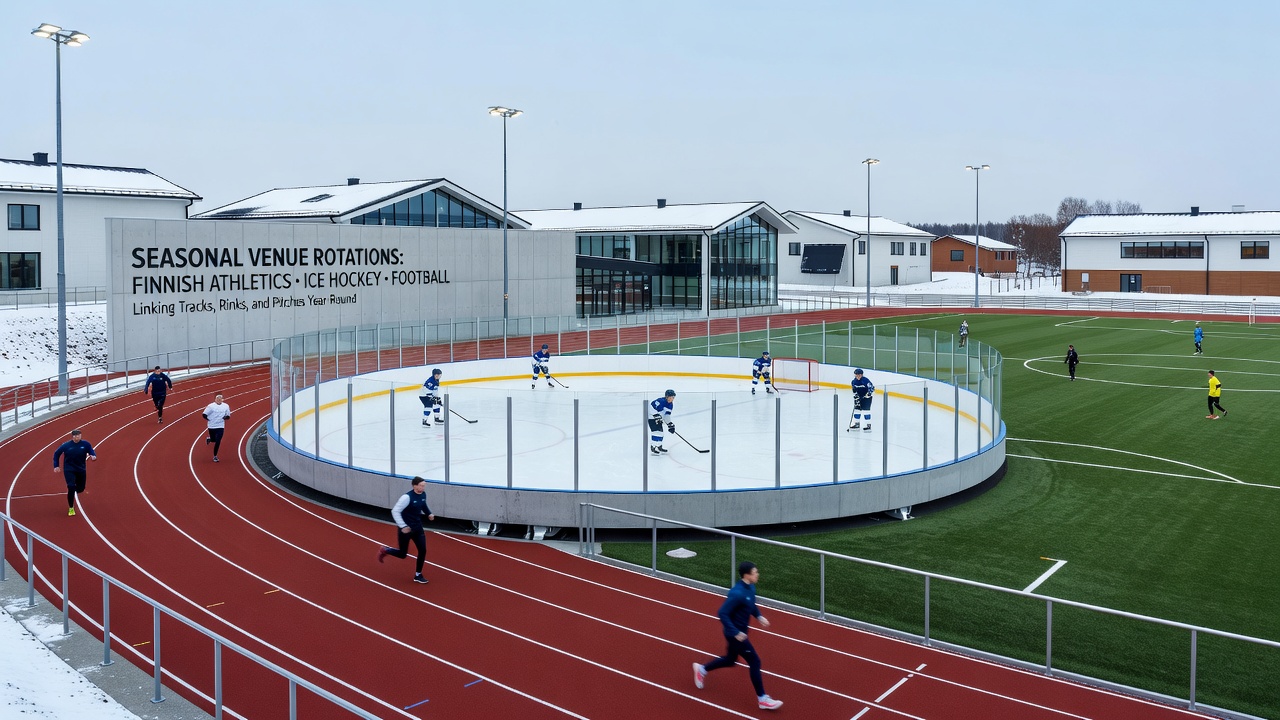
What's interesting is how local sports clubs share storage containers positioned at venue perimeters so that athletics timing systems move into the same sheds that later hold hockey goal frames, and football nets occupy adjacent compartments. This arrangement cuts down on duplicate purchases and keeps inventory visible to all three user groups throughout the year.
Infrastructure Adaptations and Climate Considerations
Climate data from the Finnish Meteorological Institute guides the timing of each rotation because early snowfalls can accelerate ice hockey setup while delayed thaws extend football use into May. Municipal engineers therefore monitor soil temperatures and precipitation forecasts to decide whether to accelerate or postpone surface conversions, and they adjust refrigeration output accordingly to avoid energy waste. In practice, facilities in central Finland complete the full cycle three times annually whereas southern sites often manage only two full rotations due to milder winters.
Those who study these systems point out that modular flooring panels allow quick switches between athletics surfaces and football turf without major excavation, whereas ice hockey arenas require more extensive underfloor piping that stays dormant during warmer months. Budget allocations from regional development funds cover the specialized equipment, and annual reports list the exact number of days each venue operates in each configuration.
Conclusion
Seasonal venue rotations in smaller Finnish municipalities demonstrate how athletics tracks, ice hockey arenas, and football pitches operate from the same physical spaces through coordinated planning and adaptable infrastructure. Government statistics confirm these arrangements support consistent training access across disciplines, and continued alignment with October 2026 timelines will determine how many additional communities adopt similar models in coming years.