How Finnish Athletics Timing Data Shapes Ice Hockey National Team Call-Ups Ahead of Olympic Qualification Windows
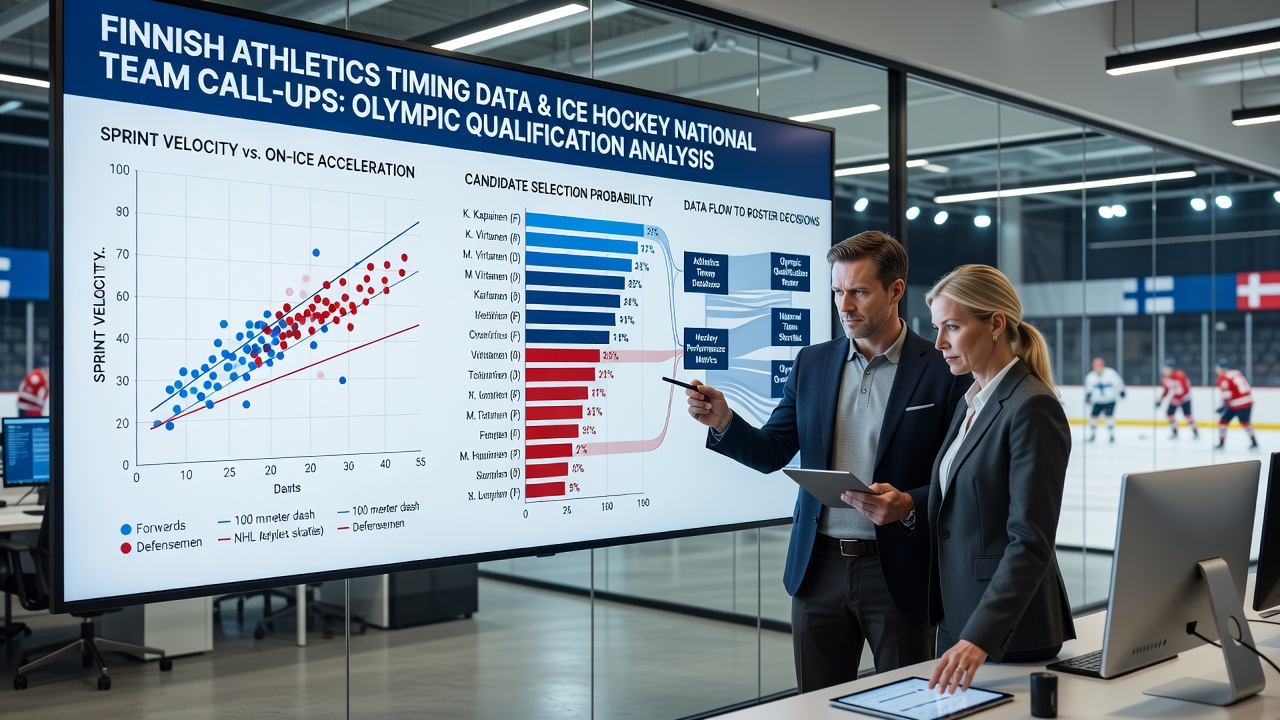
Timing data from Finnish athletics programs feeds directly into ice hockey national team evaluations, and coaches review sprint intervals plus endurance splits when they assess players ahead of Olympic qualification cycles. Finland's sports institutes collect precise measurements on acceleration phases and recovery intervals, then analysts compare those figures against performance benchmarks that correlate with on-ice demands during high-stakes international matches.
Data Collection from Athletics Meets
Finnish athletics federations record timing metrics at national championships and regional events throughout the year, and these datasets include 40-meter dash times, 400-meter splits, and repeated sprint protocols that highlight an athlete's ability to maintain speed under fatigue. Ice hockey selectors access anonymized portions of this information through shared digital platforms managed by the Finnish Olympic Committee, which allows them to cross-reference skating speed indicators without relying solely on game footage.
Researchers at the University of Jyväskylä have documented how elite-level timing scores from track events align with skating stride efficiency in controlled studies, and their findings indicate that players posting sub-4.8-second 40-meter times often demonstrate quicker transitions in defensive zone coverage. Such correlations help national team staff narrow candidate pools months before qualification windows open.
Application to Player Selection Processes
National team coaches integrate athletics timing results into broader scouting reports that already contain match statistics and strength measurements, while they prioritize athletes whose data shows consistent improvement across multiple testing cycles. For instance, a forward who improves his 200-meter repeat sprint average by 0.3 seconds over a six-month period receives additional consideration when rosters are finalized for preparatory camps.
September 2026 marks a critical checkpoint for qualification pathways leading into the next Winter Olympics cycle, and timing data gathered during the preceding summer athletics season informs decisions about which players receive invitations to evaluation tournaments. Selectors examine longitudinal trends rather than single-test snapshots, and they combine these insights with positional needs identified through video analysis.
Case Examples from Recent Cycles
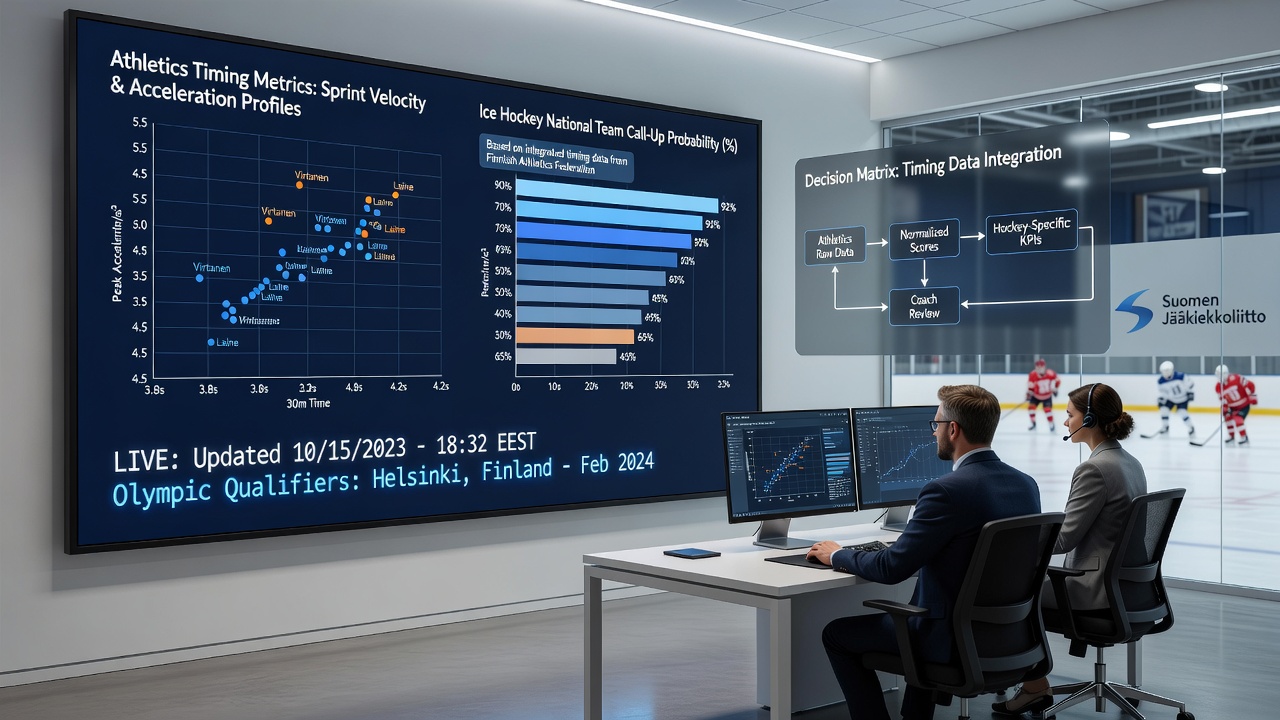
One documented instance involved a defenseman whose 60-meter timing data placed him in the top decile among Finnish athletes aged 22 to 26, and this metric contributed to his inclusion in the national squad for an Olympic qualifier despite limited senior international appearances. Another case featured a goaltender whose lateral movement tests, derived from adapted athletics protocols, highlighted recovery speeds that aligned with elite puck-tracking requirements.
International Ice Hockey Federation reports show that teams incorporating cross-discipline metrics have adjusted their shortlists earlier in qualification periods, and Finnish staff apply similar methods by monitoring how timing improvements translate to reduced fatigue during third-period play. Data from the Finnish Institute of High Performance Sport further supports these approaches by providing standardized benchmarks that account for age and position variations.
Integration with Broader Olympic Preparation
Coordination between athletics and ice hockey federations occurs through joint working groups that meet quarterly, and these sessions focus on aligning testing calendars so that peak timing data becomes available before key selection deadlines. The approach allows selectors to identify late bloomers whose athletic metrics have risen sharply, even if their club hockey minutes remain modest.
Canadian and Australian sports science collaborations have examined similar multi-sport data pipelines, and their published findings suggest that timing-based filters can reduce selection bias when combined with traditional scouting. Finnish programs adapt these principles while maintaining focus on domestic athlete pools and the specific demands of Olympic ice hockey qualification tournaments.
Conclusion
Finnish athletics timing data serves as one component within a layered evaluation system that supports ice hockey national team call-ups ahead of Olympic qualification windows. Shared datasets, longitudinal tracking, adn cross-referenced benchmarks enable selectors to identify candidates whose physical profiles match international competition requirements. As September 2026 approaches, continued refinement of these methods will shape roster decisions for upcoming cycles.